
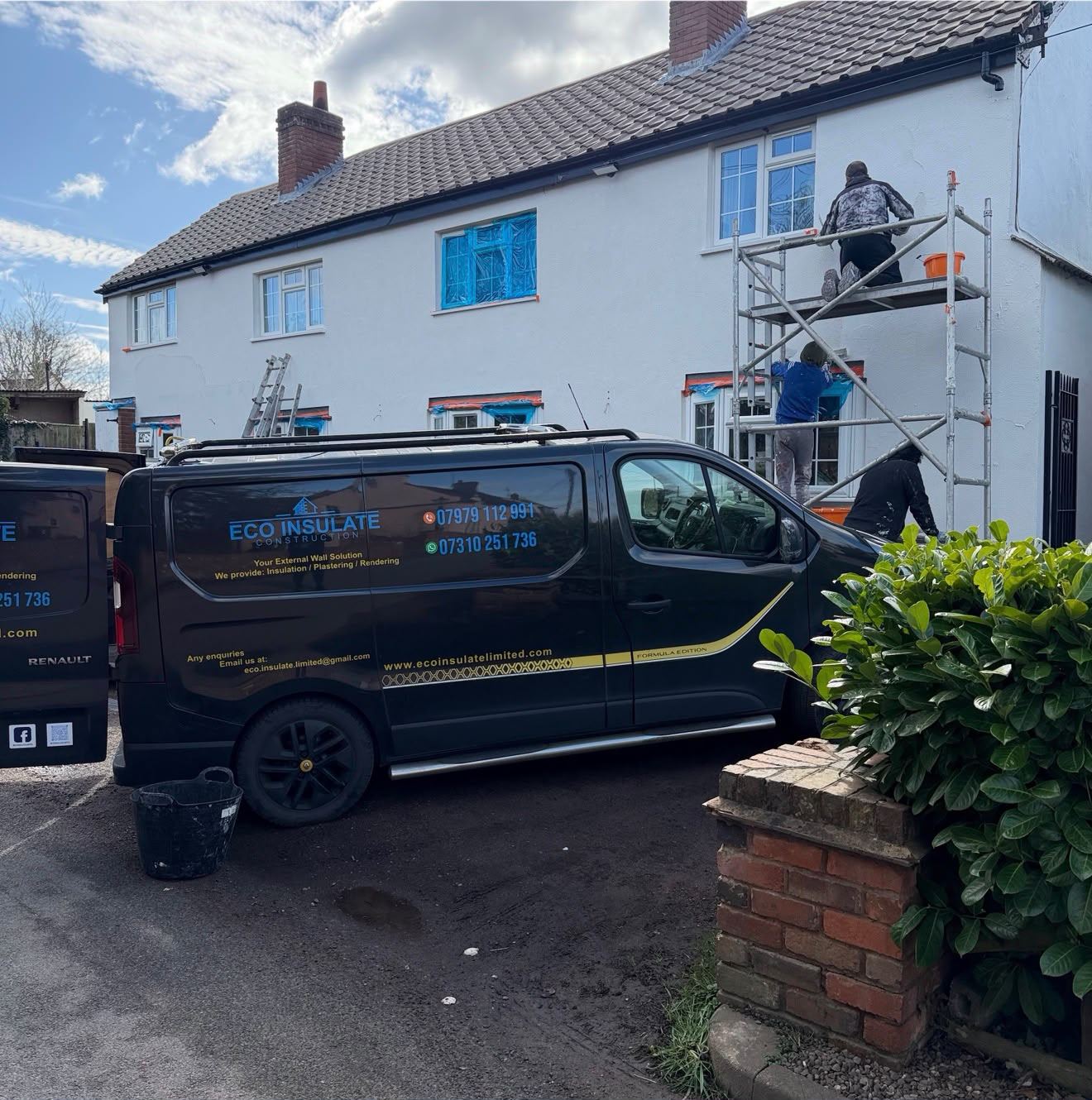
Render and cold weather do not mix well, but that does not mean all work stops between November and March. Here is how we manage it.
One of the most common questions we get from late autumn onwards is whether rendering can carry on through winter. The honest answer is: sometimes, with care, and never in a hard frost.
Why cold is a problem
Cement and lime-based renders need positive temperatures to cure. If fresh render freezes, the water in it expands and disrupts the set, leaving a weak, crumbly surface that has to come off and be redone. Silicone thin-coat top coats also need a minimum temperature, usually around 5°C and rising, to form their film properly.
What we can still do
Scaffolding, board fixing, beading, substrate repairs and preparation all continue through winter. We watch the forecast closely and only apply wet coats when there is a clear window of a few frost-free days. Scaffold sheeting and, if needed, frost blankets protect a fresh elevation overnight.
When we will ask you to wait
If the forecast shows overnight frosts or daytime temperatures stuck near freezing, we will hold the wet coats rather than risk the finish. It is frustrating in the short term, but a rushed winter render that fails in spring costs everyone far more.
Thinking about this for your home?
Book a free survey and we will give you honest advice and a fixed written price.
Get a free quote